Kalle Reflects on the Egg
Strategic Takeaway for Leaders at All Levels, Everywhere
The egg points to a world shaped by deeply interconnected flows of information within and across organisms, species, and the environment—not metaphor, but observable reality.
In more detail
Many decades ago, in 1988, I managed to bring intellectual and financial initiatives together to produce a mass mailing to all Swedish households and schools. It contained a booklet with illustrations created by skilled artists, along with an audiocassette in which Hans Villius—a respected speaker and historian—explained the images.
Patronized by His Majesty King Carl XVI Gustaf and endorsed by 65 leading Swedish scientists in sustainability at the time, this material reached the doorstep of every household and school in Sweden in April 1989.
As a cancer scientist and medical doctor, it felt natural for me to write the manuscript using the healthy cell as the point of departure.
First, because the DNA of the fertilized egg cell, the most elementary cell of all complex organisms, contains their entire enigma. Every aspect of its architecture is embedded in this blueprint of life.
Second, because cells cannot be negotiated with, nor persuaded to change how they sustain life. Their basic requirements must be met—across differences in human values, beliefs, cultures, and political positions. This, I thought, offered a powerful foundation for consensus-building.
Soon after the launch, I was keynote at a meeting of the Swedish Society of Medical Doctors, chaired by the physician and renowned author Lars Gyllensten. I presented the project and my hopes for how it might bear fruit in the future. During the break, he offered me a powerful extension of the idea—building further on the fertilized human egg through the example of a hen’s egg.
The egg
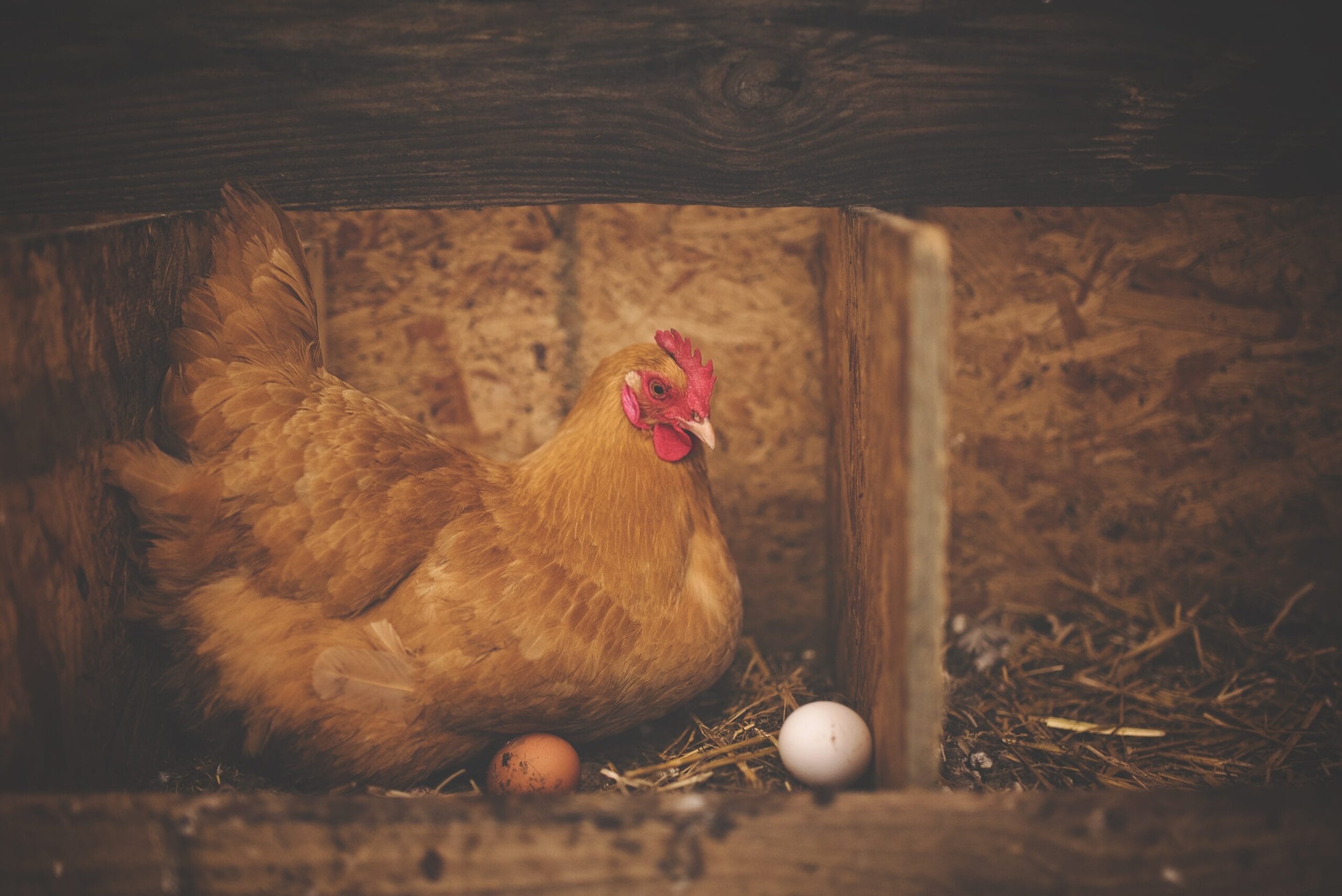
At the bottom of the hen’s egg lies its fertilized cell. The hen provides no more than warmth for three weeks. During this time, nature—acting as a Master of Information Technology—produces a chicken.
Through rapid and precisely coordinated cell division, the egg white and yolk are transformed until the chick hatches—ready to walk, eat, and seek warmth, safety, and protection from its mother.
Only minimal amounts of oxygen enter from the surrounding air, and minimal amounts of carbon dioxide exit. And what remains on the ground? Only small fragments of eggshell. Nothing more.
Now imagine a human laboratory attempting to replicate this process artificially. Can you picture the volumes of raw materials required upstream? The energy demands?
The amount of waste that would need to be handled downstream? And what would emerge from the laboratory? Certainly not a living chicken.
The amount of waste that would need to be handled downstream? And what would emerge from the laboratory? Certainly not a living chicken.
The information technology that enables this natural process operates with an energy requirement estimated to be hundreds of million times lower per bit of information than even our best engineering systems, for example, the movement of ones and zeros in computer memory. In other words, producing a chicken in an egg requires orders of magnitude less energy than our most advanced technologies need to process comparable amounts of information.
The deeper implication
There is hope in this – for physical, biological and mental reasons.
What may first sound discouraging can instead become a source of relief. Nature remains the ultimate reference point—not only philosophically, but also as a practical foundation for hope.
Everything about quality of life relates to information management. Our experiences—joy, despair, sorrow, longing, laughter, and togetherness—emerge from how our brains interpret and integrate signals from our senses, shaping both what we pursue and what we seek to avoid.
This applies not only to the biological architecture of life, but also to how humans communicate and interact at all scales.
The example of the egg reminds us that there are unprecedented opportunities to increase quality of life for all people within a thriving global biosphere. A certain joy, for example a truly memorable meal shared with friends—can be achieved with thousands of times less energy and material input than through systems designed without this understanding.
That contrast reflects a sobering reality: our current systems are very far from capable of sustaining our current population, and this is unlikely to level off before increasing by another two to three billion people.
The strategic message for leaders
From this, the implications are clear. The task is to redesign all essential elements of civilization to comply with the boundary conditions – together[1]:
- sourcing
- transport
- manufacturing
- circular material flows
- spatial planning
- human resources
…and at all organizational and regional scales.
Within these constraints, innovation in technology, business models, and governance can unlock improvements in efficiency by orders of magnitude.
The example of the egg is instructive in concrete design terms, opening avenues for intelligent innovation. It shows that radically efficient, life-supporting systems are not only possible—their principles are embedded in billions of years of evolution. This evolution can continue for roughly another two billion years—until changes in solar conditions alter Earth’s habitability—provided it is not systematically undermined by the eight design flaws of our current civilization. The question for leaders is whether we choose to learn from and be inspired by that logic—and thereby perform endlessly better.
People are sometimes asked to consider whether cultural and political values across the globe must first be altered before sustainable design is possible. I believe that question misses the point and risks being misleading. Sharing a deep understanding—of how life operates in nature, or how elegant strategic thinking can help safeguarding it—is an often underestimated source of enthusiasm, engagement, and meaning.
Fact box – a Shared Code behind all Reflections, Podcasts, and other developments at www.stepwise.global
If you want to explore the most up-to-date version of the FSSD Operative System, please follow any of the links below. To ensure each Reflection remains self-contained, we will include only what is necessary in each case. This allows us to avoid taking up too much space in each Reflection itself, while also minimizing the risk of flawed or oversimplified interpretations of the Operative system’s Funnel, Boundary Conditions, and the ABCD process—common in other sources. You have four ways to explore:
1. Scientific foundation
Access the peer-reviewed research directly:
doi.org/10.1002/sd.3357
________________________________________
2. Practical overview
See the Operative System at fssd.global/framework-and-method/
________________________________________
3. Explore and apply
Visit: https://www.stepwise.global and explore:
• How the Operative System ‘ABCD-in-Funnel’ works in practice
• Kalle’s Reflections
• Podcasts and real-world applications
…to train the Operative System without losing the code’s systemic, systematic, or strategic perspective.
________________________________________
4. Courses and learning opportunities
Sign up for course options via our homepage