Kalle Reflects on Erosion of Terms behind Unclarity of Minds
Why Smart Groups may Act Unwisely — and What Science Offers Instead
This short reflection gathers several of my earlier texts into a single perspective. It addresses a question that is often asked—but usually in a misleading way: “How can groups of smart people act so unwisely together?” The danger is not the question itself, but how it is framed. Casting the issue as stupidity invites blame, fuels “we and them” thinking, and ultimately undermines the very change we need.
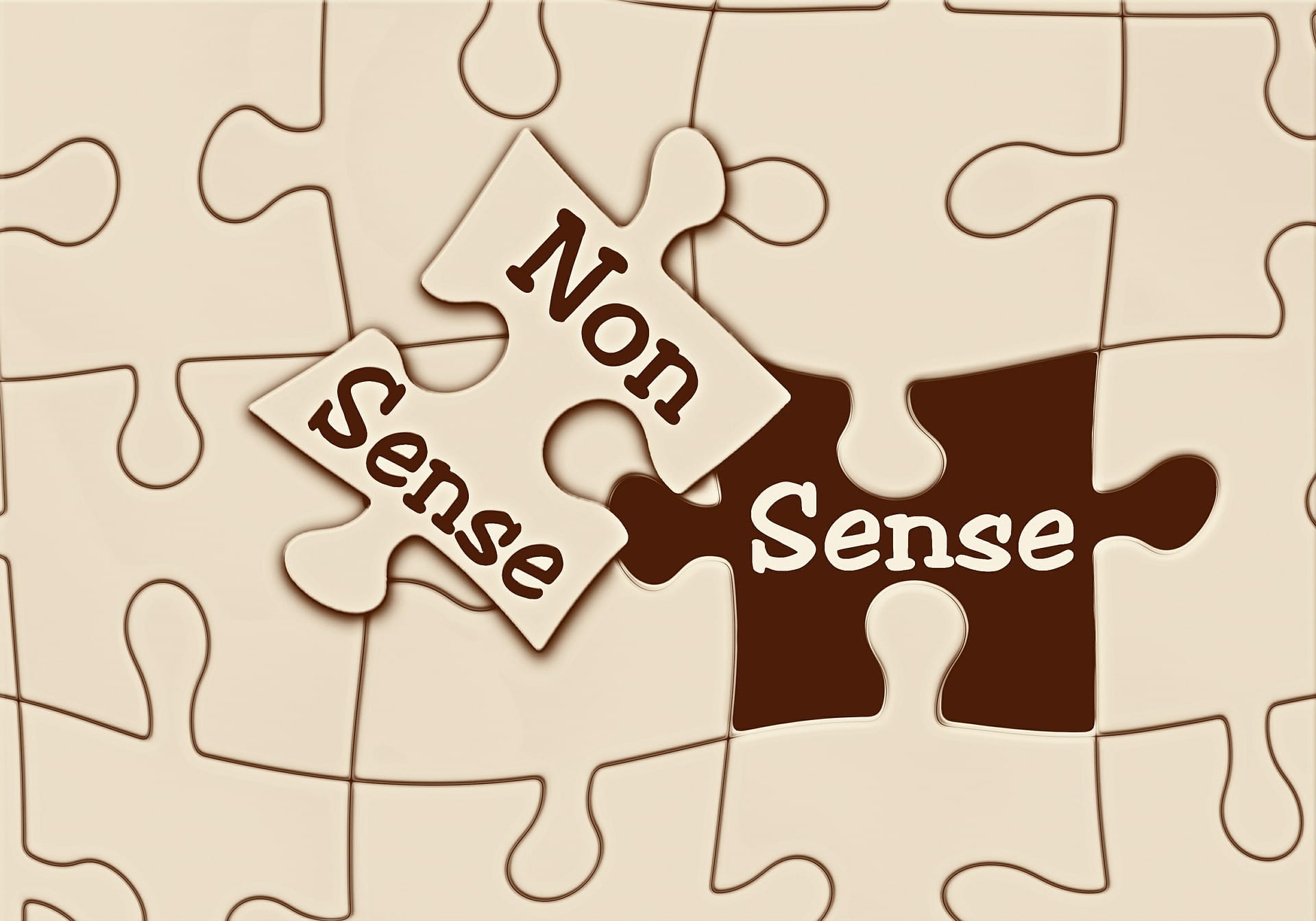
The problem is not that leaders or professionals lack intelligence or goodwill. It is that the terms we use may be unclear from the beginning, or erode over time, perhaps by lobbying. Regardless, imprecise language and categories are dangerous when we face challenges that are fundamentally about survival at scale. When language obscures that distinction, even the most capable people can coordinate themselves into outcomes none of them intend. Politically, this is often seen in how the “Green”, “Left”, and “Right” wings of party politics believe they are engaged in a value‑based clash at the centre of the political field, when in fact all are missing the point.
When Language Misleads
Consider the term “sustainability.” Does it mean the same thing to all people? That is, does it still reflect its original meaning—a state that is actively supported to persist rather than collapse? Or has the term been eroded through association with concepts often treated as synonyms, such as “the Green Movement” or “the Greening of Society”? To different people they can mean Sustainability, but to others they may imply better urban parks, improved indoor air quality, more efficient combustion engines, greener consumer products, or symbolic acts of protest. All value based expressions. When terms lacks a shared, scientific definition from the beginning, or erode that way, they become containers for conflicting interpretations.
Predictably, this vagueness breeds polarization. Some experience “green” actions as moralizing or obstructive; others experience resistance as ignorance or ill will. Both reactions feel understandable. Yet both miss the core issue.
At the most basic scientific redesign level, we must distinguish between:
- Social and ecological issues in general, and
- Social, ecological, and financial issues that determine whether the human civilization can continue to exist at scale.
These are not the same—far from it. Confusing them is not a matter of values, but of competence in systems thinking.
What Science Clarifies
In my reflections on Doing things right versus doing the right things, on Systems thinking, on the Basic sciences that underpin the Operative System, and the ones on Sustainable Energy Systems, the same principle recurs:
If something can exist within scientifically defined boundary conditions for Sustainability in the future, it can be scaled for a large population with high industrial power. If it cannot, it is—by definition—unsustainable.
By Operative System, I refer to the science‑based framework that defines boundary conditions for the sustainable and systemic redesign of organizations, products, regions, and societies.
From this perspective, examples of practices that science tells us cannot be sustained at scale include:
- Expanding energy supply by continued reliance on all types of fuels,
- Managing fertile land in ways that systematically drive desertification,
- Running geopolitics in persistent “we and them” modes that undermine cooperation.
The tragedy is not only the damage caused by these practices. It is that they distract us from how attractive the future could be if we instead invested decisively within the boundary conditions, while phasing out what violates them—in an orderly and economically intelligent and cooperative way across the World.
Why This Moment Is Historically Unique
Some argue that human societies have always risen and fallen in cycles, and that our current predicament is therefore nothing new. This may sound reassuring, but it is incorrect in crucial ways.
Several factors today are unprecedented and can only be understood through science:
- The global population is still increasing and will level off only after three or so billion more people.
- Industrial power—once available to very few—is now accessible to a rapidly growing share of humanity.
- Many of the combined impacts of population and industrial power are invisible to human senses: rising atmospheric CO₂, accumulation of heavy metals in soils, global land degradation, endocrine disruption from certain chemicals.
Yes, past societies have violated the boundary conditions too. On Easter Island, for example, conversations failed around the metaphorical fireplace, leadership faltered, and social as well as ecological collapse followed. But today there is no “other island” to escape to. Our current ‘island’—the Earth within the universe—is no easier to leave than Easter Island was then.
What is different now is scale and industrial power. All boundary conditions are being violated globally, largely by the industrialized world, while the development path offered to the rest of humanity replicates the same mistakes instead of recruiting global cooperation around scalable solutions.
From Blame to Clarity
When leaders become trapped in what might be called muddy‑water rhetoric, the usual response is to commission more studies of impacts—learning ever more about the gravity and number of impacts at the cost of how to strategically design them out of the system.
The invitation here is not moral superiority, but clarity.
Leadership today requires the ability to:
- Distinguish clearly between what can and cannot be sustained at scale,
- Use language that reflects that distinction,
- Align innovation, investment, and cooperation accordingly.
This is not about choosing sides in a cultural conflict. It is about upgrading the operating logic of civilization to match the physical and ecological realities upon which it depends.
A Closing Reflection
Groups of intelligent people do not fail because they are stupid. They fail when their shared models of reality are allowed to become incomplete or incoherent, often by erosion of terms in the societal discourse. When that happens, coordination itself becomes destructive.
The encouraging news is that the same science that reveals our boundary conditions also reveals immense opportunity. With clearer concepts, disciplined language, and an operative framework grounded in natural laws, leaders at all levels everywhere can replace polarized debate with strategic progress, making the future not only viable, but genuinely more fun and worth moving toward.