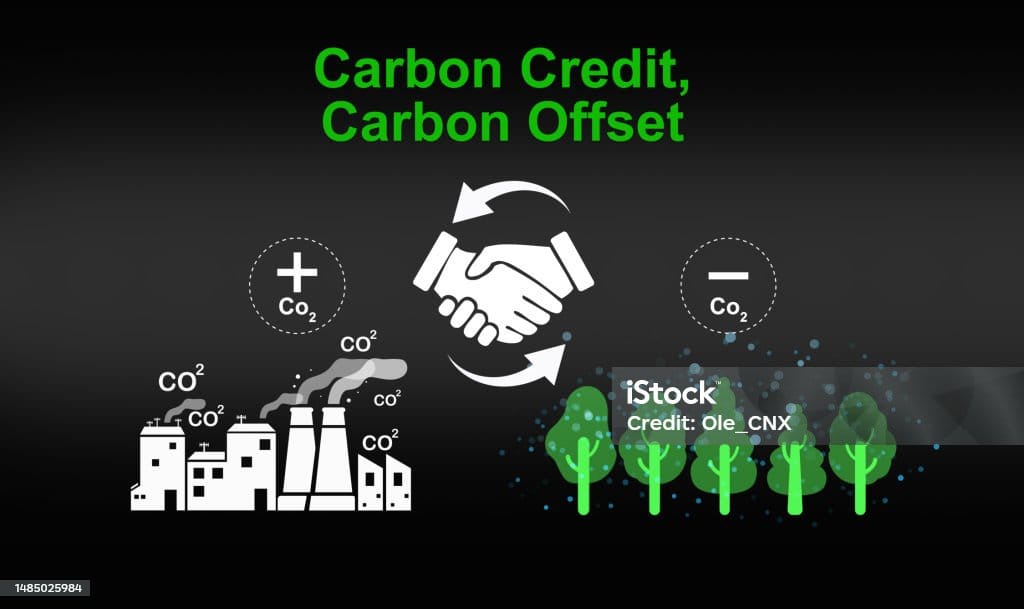
Kalle and Claes Kollberg reflects on CCS, Illusion or Salvation
Kalle and Claes Kollberg 1) reflects on CCS—Illusion or Salvation?
1) Claes Kollberg is founder and CTO of Cemvision https://www.cemvision.tech/
Takeaway for leaders at all levels in all sectors
Contributing to the climate transition by capturing carbon dioxide—Carbon Capture and Storage (CCS)—is heavily debated, often portrayed either as a dangerous illusion or the salvation of civilization. In fact, depending on how we model the underlying conditions, both outcomes are possible. To assess the opportunities and risks of CCS technologies, rigorous modelling within the boundary conditions of the sustainability “Operating System” is essential. This need for proper modelling will be explored briefly below. The result must then be assessed against technical solutions that completely eliminate CO2 emissions.
In short, we cannot afford to be careless in our modelling, because the differences between existing and emerging CCS approaches are substantial. This must be made far more explicit—not only among researchers and companies hoping they have chosen the right technology, but also among financial actors investing in these systems and policymakers allocating public revenues for the green transition.
Key modelling considerations include:
(i) First of all, to find innovative ways of product-service systems to completely phase out the use of fossil fuels as well as all kinds of land degradation.
(ii) The availability and cost of the inputs required to run various CCS processes;
(iii) The developmental potential of the technologies;
(iv) The security and permanence of carbon storage;
(v) the importance and scalability of the emission source to which CCS is connected; and more.
(vi) attractiveness of products from CCS processes on future markets.
Our experience is that such modelling is rarely conducted. “Doing things right” are completely dominating, while forgetting “doing the right things”.
________________________________________
In more detail
We cannot even say “so far, so good” about the ongoing CO2 increases in the atmosphere. This is largely because of time-lag effects between new increases in atmospheric CO₂ and the onset of significant—potentially irreversible—damage, or worse: the crossing of points of no return that could trigger self-reinforcing feedback loops beyond the ability of civilization to control.
Examples include accelerated Arctic ice melt weakening the Gulf Stream and pushing us toward a premature ice age, or methane release from thawing permafrost.
Against this backdrop, one element of today’s public climate debate must be discarded immediately: the notion that carbon capture provides an excuse to relax efforts to reduce emissions, whether from fossil fuels or land degradation.
Put differently: we urgently need to test and deploy CCS methods, both to reduce the atmospheric CO₂ burden we have already created and to address the additional increase we will inevitably fail to fully prevent.
________________________________________
Why CCS methods matter—and why scalability must be modelled properly
The various approaches to carbon capture differ widely in their future scalability, determined by numerous factors that must be modelled together within sustainability boundary conditions. Examples include:
(i) A first reflection about CCS is that we may need it, as a general approach to reduce the increased CO2 levels in the atmosphere we have already put there. Again, because we cannot even say “so far so good”.
(ii) Availability of mineral resources and other inputs.
Many CCS technologies rely on specific minerals, each with its own availability profile, cost trajectory, importance to other societal functions, and technical characteristics. Differences here can be dramatic. Carbon storage using mineralization of volcanic rocks containing calcium- or magnesium-silicate, like olivine and serpentine, has potential at scale, but also process limitations. They require higher CO2 concentration, grinding to a fine powder, and water or pressure to accelerate the process. In addition, industrial waste like metallurgical slag or fly ash can be used in a mineralization process. But the slow mineralization process compared to emissions of 250 ton/hr from a standard cement plant will be a challenge. There will also be challenges related to logistic solutions for transporting and handling of all material to and from a CO2 emission point source.
(iii) Energy requirements.
Some CCS processes demand vastly more energy than others, with major implications for cost, feasibility, and sustainability. For example, amine-based post-combustion technology in cement production will require an estimated additional energy requirement of 80% just for CO2 capture, and the total production cost will more than double. Other solutions, like oxyfuel and calcium looping, operate at higher CO2 concentrations and are therefore more efficient, but also more complex and currently unproven at scale.
(iv) Security of storage.
Risks vary significantly—from relatively high risks associated with injecting CO₂ into depleted gas fields to considerably lower risks when CO₂ is mineralized into stable geological formations.
(v) Breadth of application.
Possibilities range from point-source capture (e.g. cement plants or fossil power stations) to atmospheric removal designed to create negative emissions.
(vi) Market demand for products derived from a general atmospheric CO₂ removal.
Examples include raw materials for construction purposes and polymer production (e.g. piping systems). Another example is general efforts of CCS for instance various ways of reverting land degradation and desertification by new ways of grazing or algae production.
(vii) The societal importance and financial relevance of the emitting sector.
For example, the cement industry produces a material essential for a sustainable future where dense, vertical urban development (“decentralized concentration”) will be necessary. (See the previous Reflection on spatial planning.)
(viii) Policy instruments and taxation.
Some emissions sources (e.g. vehicles, industrial stacks) are straightforward to tax, while unexpected leakages from CO₂ storage sites are not.
(viii) Cost-effectiveness after full assessment of revenues and expenses for the various applications.
________________________________________
Conclusion
Only after conducting rigorous modelling of the already diverse CCS and carbon avoidance technologies, evaluated within a scalable future perspective and under sustainability boundary conditions, can we sensibly assess their strengths and weaknesses as well as innovatively find new models for product-service-systems where technologies, business, and policies are effective together.
Yet this is almost never done, representing a major drawback for appropriate science, business developments, policies and thereby a financial risk and a major threat to the green transition.
It is crucial that we continue developing various CCS methods—but not without evaluating them at the meta-engineering level: distinguishing not only how to do things right, but also how to do the right things. (See separate reflection on this point, Kalle reflects on trashing unscalable ideas, not “improving” them).