Corporate Sustainability Reporting: Essential, Best FSSD
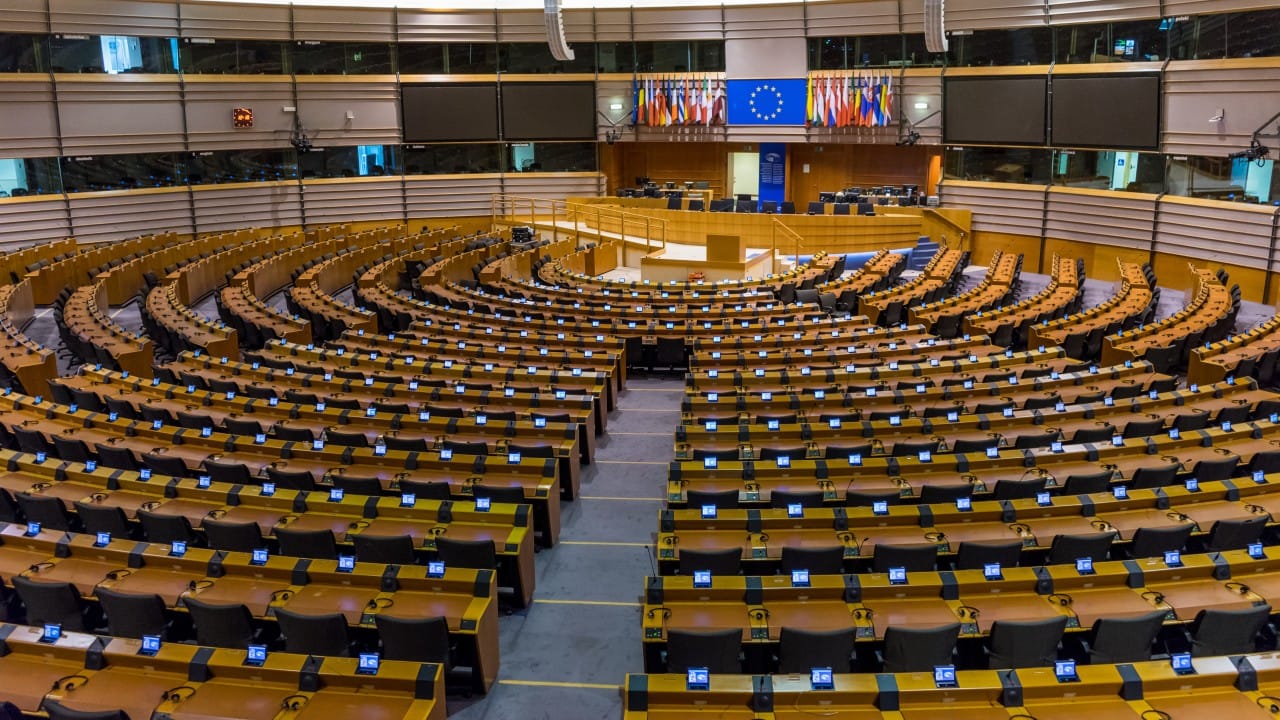
Kalle reflects on the new EU directives for Corporate sustainability reporting – European Commission
Takeaway for leaders at all levels everywhere
A stricter EU stance on sustainability is a genuine opportunity for Europe and the world—if we pair administrative rigor with equally rigorous content. Corporate sustainability reporting will only drive real change when organizations plan and report within a clear strategic structure that is systemic (world-level boundary conditions), systematic (process discipline), and strategic (business model and bottom-line relevance). Without an operative system that organizes actions toward scalable success, even robust directives risk becoming “more of the same”: compliance paperwork that feels like cost and burden rather than a catalyst for innovation, learning, and competitive advantage. With the right structure, reporting becomes easier, more meaningful, and more rewarding—because it trains organizations to act for the common good in ways that directly improve their own bottom lines.
More in detail
Why cohesive reporting matters—and what’s missing
A uniform system across the EU would make organizational progress comparable over time and between peers—valuable to companies, investors, regulators, and society. But cohesion must go beyond a common administrative template for impact metrics. It should also include a strategic logic that helps organizations plan stepwise progress toward scalable success. This is where the Framework for Strategic Sustainable Development (FSSD), with its ABCD process in the “Funnel,” can help. The FSSD provides an operative system that keeps planning connected to scientific boundary conditions for sustainability while enabling flexible, cost-effective steps over time.
How the FSSD strengthens EU reporting
With the FSSD as the operating system, organizations can evaluate whether each action is a credible step toward long-term goals that are scalable within systemically robust sustainability constraints. This supports a reporting logic that can distinguish between “good” and “bad” in context. For example, a choice that appears “good” in a narrow time or space can become “bad” when it leads into costly suboptimization or locks in dead ends. Conversely, a decision that includes a near-term trade-off can be “good” if it clearly advances the organization toward sustainable boundary conditions—much like sacrificing a chess piece to secure checkmate. The point is not perfection at every step, but disciplined movement toward a robust end-state.
The FSSD also amplifies the value of the many “apps” available: the UN Sustainable Development Goals, Planetary Boundaries, circular economy methodologies, and, crucially, the EU’s new directives themselves. Instead of picking tools or goals arbitrarily, organizations can cross-read each app against their own ABCD plan—populating A (principles and boundary conditions), B (current state), C (future solutions), and D (prioritized actions). This prevents a common misstep: selecting a handful of SDGs that “seem relevant” without an organizational plan for goal-setting, analyses, planning, integration with optional support-tools, sequencing, elegant trade-offs, and without understanding the relationship between the Operative system (FSSD) and the “App’s” organizations want to use.
Corporate sustainability reporting: strategic indicators versus impact indicators
A key confusion/ignorance in corporate sustainability reporting is the difference between two types of indicators:
– Strategic indicators: These track whether the organization is moving systematically and strategically along its ABCD plan toward goals that are modeled within systemically robust sustainability constraints. They monitor the integrity of the plan itself—the logic, prioritization, and pace of progress—so that steps add up to scalable and long-term success. These indicators are often missing all together, yet they are the backbone of credible transition planning.
– Impact-driven indicators: These describe performance within specific impact domains—such as CO2 emissions, toxic releases, land-use impacts, or health outcomes—and the efforts to “fix” them. They are essential, but when used in isolation they fragment attention and risk pitting one impact area against another. Without a strategic context, the sheer number of impacts and tools—Planetary Boundaries, TCFD, GRI, CSRD metrics, Science Based Targets, circularity scores, social metrics, and more—can create confusion and competing priorities.
In the best case, impact-driven indicators support strategic indicators by informing smarter priorities and better design. In the worst case, they overwhelm decision-makers and reinforce reductionism. Or in other words, the mistaken belief that breaking the mission into siloed, measurable parts—without a systemic overview—would lead to success. It doesn’t. Systemic clarity is what allows the details to be managed more efficiently, not the other way around.
An example from transport: planning that scales
Consider a transport company preparing for a future shaped by EU incentives and market shifts. Initially leaning toward biofuels, the company decides to apply the FSSD and conduct ABCD workshops with value chain partners and stakeholders. Reviewing scientific insights on energy systems and spatial planning, they model the energy, materials, land, and infrastructure implications within sustainability boundary conditions (“A”) and discover:
– Biofuels are inherently energy-inefficient (<1% conversion of sunenergy, through photosynthesis, harvesting of biomass, production of fuels, to transports to gas-stations and eventually performing in a combustion engine).
– Land is a limiting factor, with urgent needs for biodiversity, climate regulation, soil health, and food production—pressing against biofuel expansion.
– Electrification delivers higher system-wide efficiencies—from generation (using renewable flows) to distribution (grids) to use (electric powertrains).
– Electric engines outperform combustion engines over their lifecycles, further tipping the scales.
Conclusion: biofuels are not scalable as a long-term solution for road transport. But as a transitional measure in certain segments—such as shipping—biofuels can still be “good” if used intentionally while building toward scalable electrification. Moreover, facilities for biogas or alcohol can pivot later to producing long-lived materials (acting as carbon stores) and contribute to soil re-fertilization and additional carbon sequestration.
The company also addresses a key question: are metal reserves sufficient for electrification? Metals differ from fuels because they can be recycled, but today’s losses to the environment are too high to be scalable. The answer emerges through strategy: innovation in battery chemistries, component design, solid-state batteries with higher energy density and lower metal losses, and business models that enable near-closed-loop recovery. With proactive planning and design for circularity, metal availability need not constrain electrification.
In other words, strategic planning makes room for smart trade-offs while moving decisively toward scalable solutions. That is precisely the kind of journey corporate sustainability reporting should illuminate.
Back to the EU directives—and how to use them well
Are the EU’s directives on corporate sustainability reporting good? Yes. As with any “app,” however, they need an operating system. Without a strategic organizational structure, organizations may either be lulled by a false sense of progress—“something is finally happening at the highest level”—or dismiss the directives as just another compliance burden. Both reactions are costly. In complex systems, intuitive trial-and-error won’t be fast or coordinated enough to meet the challenge across sectors and regions.
With the FSSD, applying the EU framework becomes easier. A robust administrative structure does not compete with robust strategic planning; it enables it. When corporate sustainability reporting is organized around an ABCD plan and system-level boundary conditions, impact data flow into a coherent strategic mold. The resulting “casting” aligns metrics, innovations, trade-offs, and investments into a stepwise path toward scalable success—while filtering out data that are not strategically relevant.
Conclusion: make corporate sustainability reporting a lever for strategy
Used well, the new EU directives on corporate sustainability reporting can train organizations to think and act systemically, systematically, and strategically—making reporting not only lighter, but more valuable. It becomes easier and more motivating to plan when a clear strategic overview guides decisions. The sense of “extra work without meaning” disappears because reporting aligns with value creation, risk reduction, innovation, and competitive advantage. This is how corporate sustainability reporting fulfills its promise: by embedding impact data within a strategic operating system that turns compliance into momentum, and measurement into movement. Many FSSD experts stand ready to help the European Commission and organizations across the EU unlock that potential.
All hot topic Reflections are direct consequences of our Operative System.
For a deeper dive into the science behind the Operative System that informs all Reflections, see the peer-reviewed Open-Source paper with all its references: doi.org/10.1002/sd.3357. For the full title, see footnote below.
Or, for concluding reflections, practical insights and training, click on “Kalle Reflects” to see all reflections.
If you need any further advice, perhaps getting some further references, please send a question to us from the homepage.
Footnote: Broman, G. I., & Robèrt, K.-H. (2025). Operative System for Strategic Sustainable Development―Coordinating Analysis, Planning, Action, and Use of Supports Such as the Sustainable Development Goals, Planetary Boundaries, Circular Economy, and ScienceBased Targets. Sustainable Development, 1C16.