Kalle reflects on Risky details blurring Real Solutions, for instance CO2 Equivalents and CSS
Takeaway for leaders at all levels everywhere
CO2 equivalents are a useful scientific tool for comparing the heat-trapping power of different greenhouse gases. They help climatologists translate methane, nitrous oxide, and others into a common currency. Yet CO2 equivalents can also be Operationally confusing in public debates—much like appeals to ancient climate shifts and optimistic promises about Carbon Capture and Storage (CCS). The practical truth is simpler: human activity is driving a systematic rise in atmospheric CO2, and that remains the dominant force behind today’s climate change. In a world of complex interconnections, exploration of details matter, but we must practice political and strategic skepticism when terms like CO2 equivalents, CCS, or deep-time climate history are used to distract from the urgent work of changing how we operate.
The goal is to stay Operationally rational: avoid drowning in complexity, stop chasing piecemeal fixes, and redesign systems upstream so action becomes clear, coordinated, and effective.
More in detail
Understanding CO2 equivalents without losing the plot
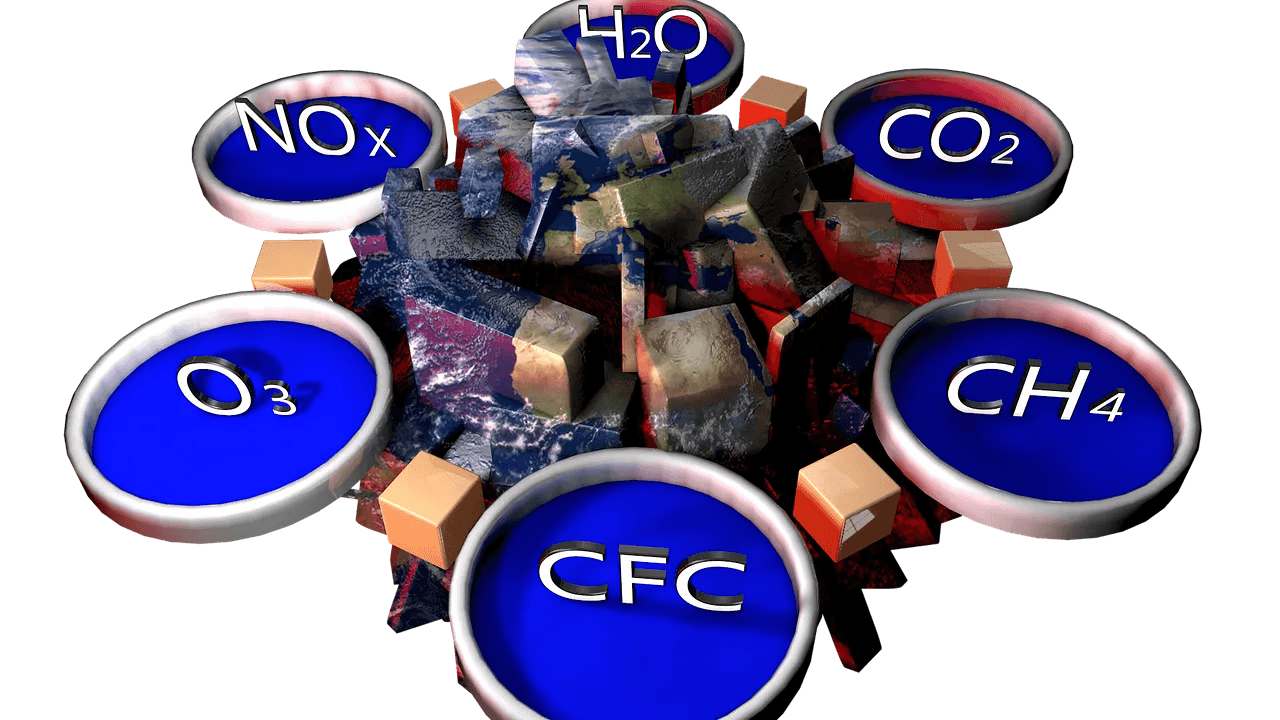
Methane has a higher heat-increasing effect per unit than carbon dioxide. When we compare gases in this way, we express their impacts as CO2 equivalents—a shorthand for relative warming power over specific time horizons. In the scientific literature, CO2 equivalents are not new; they’ve appeared in models and policy discussions for decades. Lists of greenhouse gases and their CO2-equivalent values exist for good reasons.
But this useful tool can mislead when ripped from context. The sheer volume of CO2 emissions still overwhelms the climate system. That is why climate scientists justifiably focus on cutting CO2 at speed and scale. CO2 emissions from energy, industry, land use, and soil degradation (a significant contributor) combine to create the primary driver of warming. Framing debates around other gases without acknowledging CO2’s dominance is a recipe for delay.
The pitfalls: distraction, delay, and denial
Because CO2 equivalents highlight the potency of gases like methane, they can tempt industries and political actors to steer the conversation away from CO2. This is a psychological and rhetorical loophole: talk about other gases, maintain business as usual for fossil energy, and argue for incrementalism. The result is confusion, not clarity.
CCS as a future complement, not a present excuse
Carbon Capture and Storage is often presented as a silver bullet. It is not. CCS may become a valuable complement to a rapid fossil phase-out and need to reduce legacy CO2 in the atmosphere. But as a primary strategy, it functions as a smokescreen—an argument for deferring the imperative systemic energy transition. Operational rationality means planning for CCS where it makes sense, while refusing to let it postpone the hard work of electrification, energy efficiency, and clean energy deployment.
Ancient climate cycles are irrelevant to today’s choices
Earth’s climate has fluctuated naturally for billions of years. That is scientifically fascinating—and practically irrelevant to what civilization must do now. If natural variability exists, that shortens, not lengthens, our margin for adding heat to the system. Using deep history to justify delay today is poor logic and poor risk management.
Complexity is real—but it’s manageable by design
Climate dynamics are coupled and nonlinear. Methane from livestock and thawing permafrost for instance, cause feedback loops that amplify warming. Livestock management affects soil structure, which can either release or sequester carbon. Feed inputs link to deforestation and land-use emissions abroad. Look closer and you see interwoven systems: energy, food, land, health, finance.
Piecemeal scientific arguments—true in isolation—often mislead in practice. The solutions are found upstream, not downstream: redesign how we produce, move, and consume. This is where design-science and structured strategic frameworks become essential.
An Operationally rational path: ABCD in the Funnel (FSSD)
A practical way to manage complexity is the Framework for Strategic Sustainable Development (FSSD) and its ABCD method:
– A: Define success. Model attractive futures within eight sustainability boundary conditions. Imagine energy, transport, agriculture, forestry, materials, and human relations operating within these conditions—individually and together.
– B: Map the present. Identify assets, pressures, risks, and lock-ins in context of attractive futures modelled within the boundary conditions.
– C: Generate options. List measures that move from B to A, i.e. can bridge the gap in between.
– D: Prioritize steps. Sequence actions from C for maximum leverage, speed, and return on investment.
“App’s”. During the ABCD process, consider available “apps” as support tools that may serve your ABCD process, but only as part of the coherent whole of the ABCD process itself.
This whole approach shifts us from reactive complexity to proactive design. It connects sectors under shared constraints, revealing synergies that siloed thinking misses. Health and food policy can align to reduce red meat consumption, which lowers pressure on land, shrinks “ghost acres” abroad, and enables integrated landscape management that stores more carbon. Bio-based resources can move from biofuels toward higher-value material inputs and soil-building amendments. With the same boundary conditions guiding every sector, innovation accelerates and risks drop.
Smarter livestock systems as a case in point
Not all animal agriculture is equal. Intensive systems often compact soil, increase erosion, cause emissions of pollutants, and demand imported feed tied to deforestation. Yet managed grazing can reverse desertification, restore vegetation, and enhance soil carbon. Rotational herding—akin to traditional practices by cowboys and Sámi communities—lets land recover, improves soil structure, and turns manure into a resource rather than a pollutant. Combined with dietary shifts toward less red meat and better public health, lower-intensity, regenerative systems can become part of the solution.
From confusion to coherence
The climate challenge is not only scientific; it is organizational. We must move from scattered debates—whether about CO2 equivalents, CCS, or the legacy of ancient climate cycles—to coordinated redesign. That means:
– Prioritizing rapid CO2 reductions while tackling other greenhouse gases in context.
– Treating CCS as a targeted, future complement to a completed fossil phase-out.
– Using CO2 equivalents to inform—not derail—policy and investment choices.
– Applying ABCD in the Funnel across sectors to manage complexity at its source.
– Aligning value chains so that climate action generates near-term economic returns, including for incumbents willing to pivot.
Conclusion: Keep CO2 equivalents and CSS and other interresting topics in their proper place. Used strategically they may add information to ABCD processes. Misused, they muddy the waters and enable delay. To stay Operationally rational, focus relentlessly on cutting CO2 at scale, integrate methane and other gases intelligently, and deploy CCS only as a complement after decisive fossil phase-out. Above all, redesign systems upstream through shared boundary conditions and ABCD planning so we stop arguing at the edges and start transforming the core. That is how CO2 equivalents become a tool for progress—not a pretext for postponement.
All hot topic Reflections are direct consequences of our Operative System.
For a deeper dive into the science behind the Operative System that informs all Reflections, see the peer-reviewed Open-Source paper with all its references: doi.org/10.1002/sd.3357. For the full title, see footnote below.
Or, for concluding reflections, practical insights and training, click on “Kalle Reflects” to see all reflections.
If you need any further advice, perhaps getting some further references, please send a question to us from the homepage.
Footnote: Broman, G. I., & Robèrt, K.-H. (2025). Operative System for Strategic Sustainable Development―Coordinating Analysis, Planning, Action, and Use of Supports Such as the Sustainable Development Goals, Planetary Boundaries, Circular Economy, and ScienceBased Targets. Sustainable Development, 1C16.