Kalle reflects on Population Growth: Risky Myths, Stunning Good News
Strategic Takeaway for Leaders at all Levels Everywhere
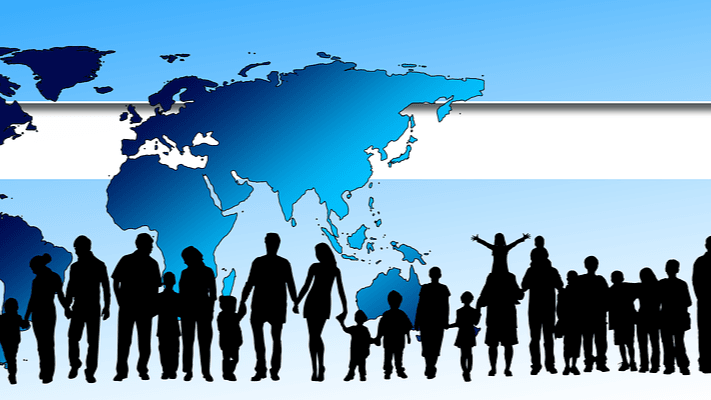
The growing human population is not rarely considered by many to be a large, or the largest, threat to survival of civilisation. The knee-jerk reception of this message is naturally, that the more people on Earth, the worse it gets faster. But a narrow focus on the growing human population goes with great risks of being based on two large misconceptions followed by flaws as regards what to do: (i) The number of people on Earth will level out at some point soon in future, countinng a few decades. (ii) And, counter-intuitive perhaps, an important driver to make this happen relatively sooner, rather than later, is to take care of one-another everywhere and across nations.
More in detail:
The number of people on Earth will not increase indefinitely, but level off at various conceivable levels, perhaps about 4 billion above the current situation. The WHO has published convincing theories as well as empirical data on this. Which implies, of course, that we must model attractive futures within sustainability constraints and at those numbers. Which is possible if we learn to think systemically, systematically and strategically in line with our Operative System.
There is a nice message here, that may help us switch from hopelessness to more constructive deeds. The rate of population growth levels off, reaches transition, at relatively lower levels in cultures where people take care of each other. In societies where this happens, the birthrate corresponds to an average of no more than 2.3 children per family leading to deathrates over time that are balanced by birth rates. Just like the situation currently is in most of Europe, where population growth is entirely due to immigration. What are natural, but easy-to-miss, mechanisms by this well-known fact?
Taking care of each other, especially when it comes to joint efforts around the elderly, children and the sick, makes it unnecessary to give birth to perhaps 10 children per family and hope for at least 50% of those to survive to take care of their aging parents. “Taking care of children” is not the least important for girls, letting them go to school and be educated instead of being married at low ages to give birth to high numbers of children.
This is good news for the FSSD platform’s service of systemic, systematic and strategic planning for sustainability. Where people from developing countries are recruited into truly cooperative projects together with the industrialized world. See my next reflection to come, about the “low consumption society”, which blurs the picture more than it helps.
All hot topic Reflections are direct consequences of our Operative System.
For a deeper dive into the science behind the Operative System that informs all Reflections, see the peer-reviewed Open-Source paper with all its references: doi.org/10.1002/sd.3357. For the full title, see footnote below.
Or, for concluding reflections, practical insights and training, click on “Kalle Reflects” to see all reflections.
If you need any further advice, perhaps getting some further references, please send a question to us from the homepage.
Footnote: Broman, G. I., & Robèrt, K.-H. (2025). Operative System for Strategic Sustainable Development―Coordinating Analysis, Planning, Action, and Use of Supports Such as the Sustainable Development Goals, Planetary Boundaries, Circular Economy, and ScienceBased Targets. Sustainable Development, 1C16.